Hanover
$13,627
per pupil
Campaign Resources
One question that often comes up in conversations about education is: How much does Hanover School Division spend per student compared with the rest of Manitoba?
The province publishes this information through its Financial Reporting and Accounting in Manitoba Education, or FRAME, reports. These reports provide a standardized way to compare school division operating expenses across Manitoba.
Looking at the most recent budget reports, Hanover School Division’s budgeted operating expense per pupil has been below the Manitoba-wide figure for each of the last four budget years.
2025/26 Budget
Hanover
$13,627
per pupil
Manitoba-wide figure
$16,493
per pupil
Difference
$2,866
per pupil
Percentage difference
17.4%
below the Manitoba-wide figure
These figures represent budgeted operating expenses per pupil. They do not represent the amount of provincial funding received per pupil.
The official FRAME budget tables show that Hanover’s budgeted operating expense per pupil remained below the Manitoba-wide figure in each of the four budget years reviewed.
| Budget year | Hanover | Manitoba-wide figure | Difference | Percentage below Manitoba |
|---|---|---|---|---|
| 2022/23 | $12,145 | $14,524 | $2,379 | 16.4% |
| 2023/24 | $12,589 | $14,941 | $2,352 | 15.7% |
| 2024/25 | $13,560 | $15,645 | $2,085 | 13.3% |
| 2025/26 | $13,627 | $16,493 | $2,866 | 17.4% |
Over these four budget years, Hanover’s budgeted operating expense per pupil was between $2,085 and $2,866 below the Manitoba-wide figure. This comparison provides useful context, but it does not by itself tell us whether students and staff have all the supports they need.
This three-part visual summary shows the historical comparison, explains what the FRAME figure measures, and identifies the questions trustees should ask when reviewing budget decisions.
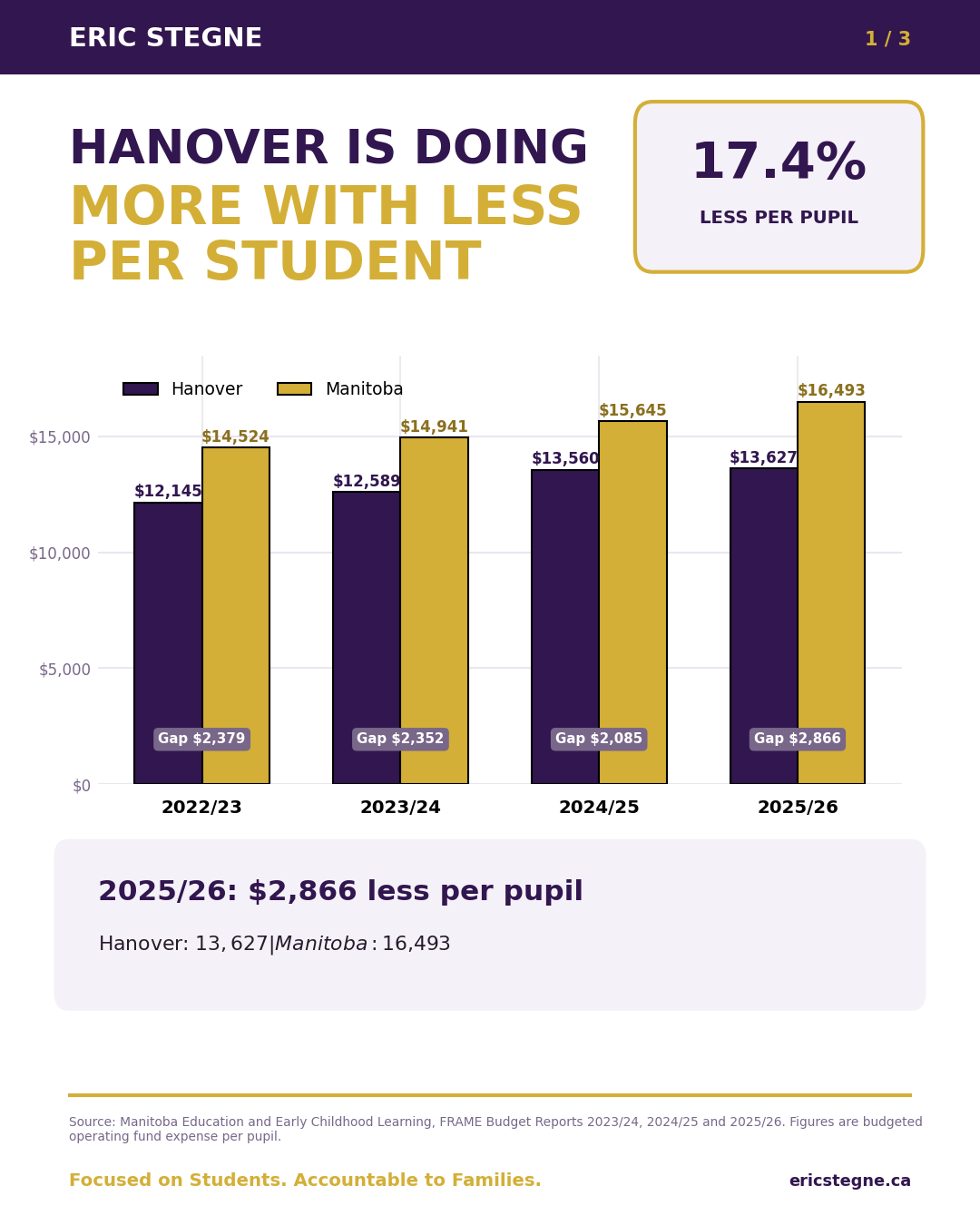
Hanover’s budgeted operating expense per pupil was below the Manitoba-wide figure in each of the four years shown.
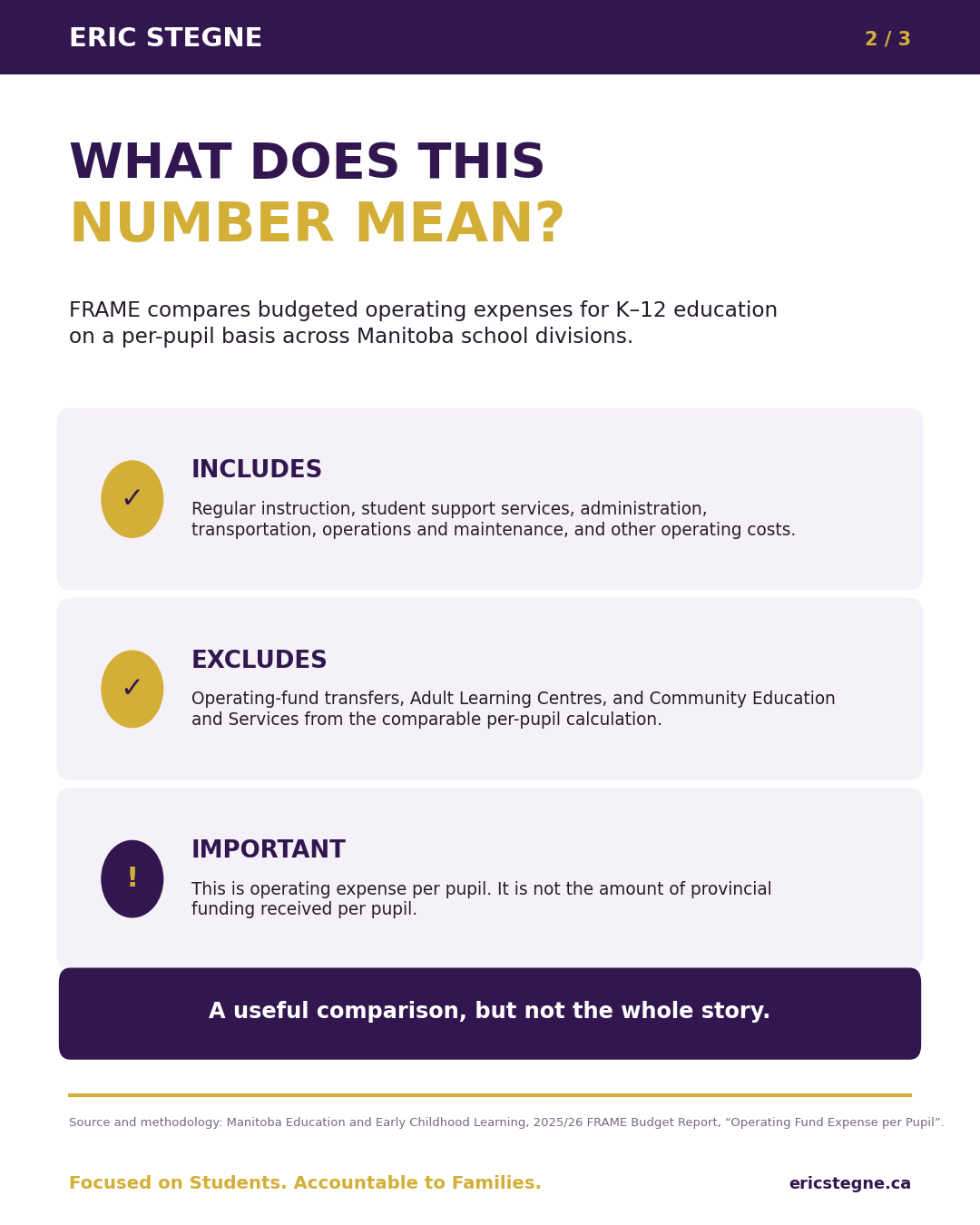
FRAME compares operating expenses across divisions, but the figure should not be described as provincial funding per pupil.
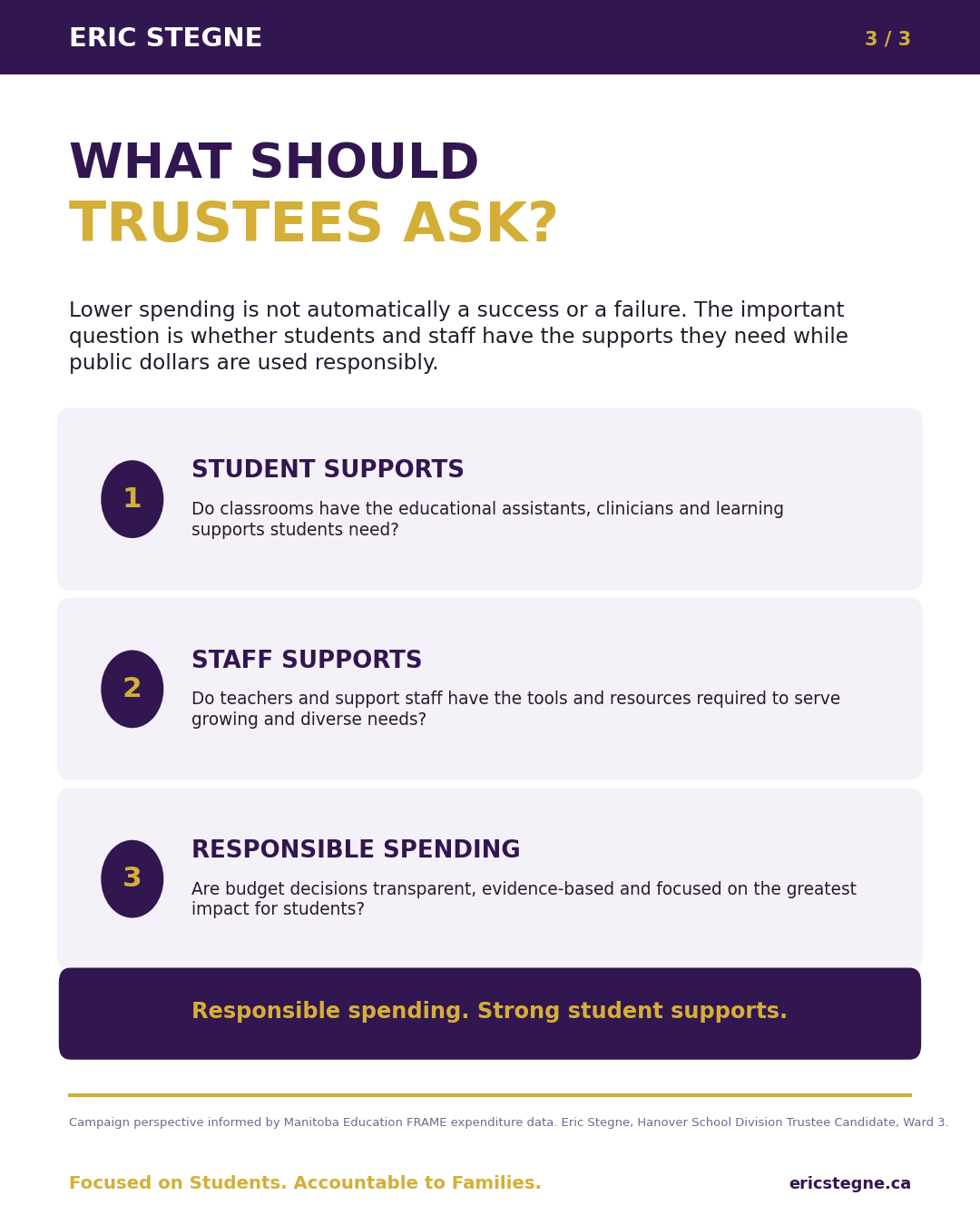
Trustees should examine student supports, staff resources, transparency, evidence, and responsible financial management together.
The FRAME comparison is based on budgeted operating fund expense per pupil. It is designed to provide a consistent way of comparing school division operating expenses across Manitoba.
The operating fund includes areas such as:
The comparable per-pupil calculation excludes operating-fund transfers, Adult Learning Centres, and Community Education and Services.
This is an expense comparison. It does not represent the amount of provincial funding received per student.
Because every school division serves different communities and student populations, this statistic should be viewed as one useful piece of information, not the entire picture.
The fact that Hanover’s budgeted operating expense per pupil is below the Manitoba-wide figure does not automatically mean the division is doing better or worse than other divisions.
Budget figures can tell us how resources are allocated, but they do not answer every question about student outcomes, classroom needs, or staff supports.
For me, the more important questions are:
These are the kinds of questions trustees should ask when reviewing budgets, policies, and long-term plans.
As a trustee candidate, I am not focused on spending more for the sake of spending more, or spending less for the sake of spending less.
The goal should be to ensure that students receive the supports they need while maintaining responsible stewardship of public dollars.
Good governance means balancing several priorities:
When difficult decisions arise, trustees should examine both the financial data and the effect those decisions will have on students, families, and staff.
Responsible spending and strong student supports should go together.
Focused on Students. Accountable to Families.
Official Manitoba Education source
Relevant table: Operating Fund Expense per Pupil
Covers the 2022/23 and 2023/24 values used on this page.
View FRAME ReportOfficial Manitoba Education source
Relevant table: Operating Fund Expense per Pupil
Covers the 2023/24 and 2024/25 values used on this page.
View FRAME ReportOfficial Manitoba Education source
Relevant table: Operating Fund Expense per Pupil
Covers the 2024/25 and 2025/26 values used on this page.
View FRAME ReportThe figures on this page are budget figures reported through FRAME. They should not be described as audited actual expenditures or as provincial funding received per pupil.